




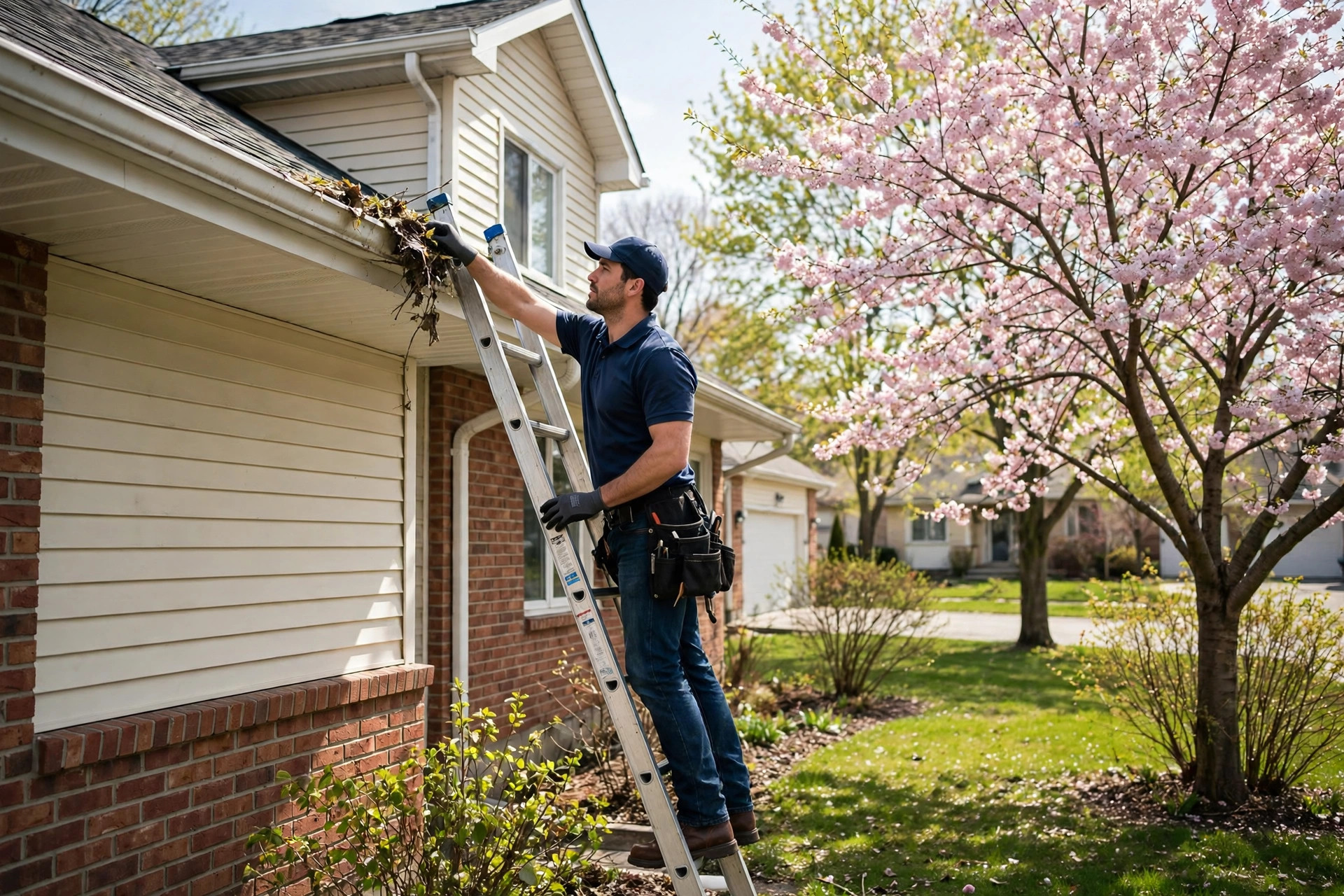
Toronto winters are hard on houses. Months of freeze-thaw cycles, ice buildup and heavy snow leave behind cracked caulking, shifted shingles, and plumbing that’s one cold snap older. A spring walkthrough — done in the right order — catches the small damage winter left behind before it turns into summer repair bills.
Here’s the spring home maintenance checklist our team works through on maintenance calls across Toronto and the GTA.
Roof, gutters and downspouts
- Shingles: Look for curled, cracked or missing shingles, especially on the south and west slopes. Winter ice dams force water under shingles — check the attic for stains after the first heavy spring rain.
- Gutters: Clean out winter debris and check for sagging sections or separated seams. Gutters that overflow in spring rain are sending water straight down your foundation walls.
- Downspouts: Make sure they discharge at least 6 feet from the foundation and aren’t cracked from frozen standing water.
Foundation and exterior
- Walk the perimeter and note new foundation cracks. Hairline cracks are normal; wide or growing ones deserve a closer look (mark the end with a pencil and date it).
- Check that soil still slopes away from the house — winter frost heave and settling can reverse the grade.
- Inspect caulking around windows and doors. Cracked or separated caulk is an open door for water and drafts; re-caulking is one of the cheapest fixes on this list.
- Check exterior faucets (hose bibs) before using them: a pipe that froze and split over winter often leaks inside the wall the first time you turn it on.
Plumbing
- Test your sump pump before spring storms: pour a bucket of water into the pit and confirm it cycles. If you have a battery backup, check its charge.
- Look under every sink and around the water heater for slow drips that developed over winter.
- Know where your main water shut-off is — and confirm it actually turns. Stuck valves are common in older Toronto homes.
Heating, cooling and air quality
- Replace or clean the furnace filter — after a full heating season it’s working hard and restricting airflow.
- Book an AC tune-up before the first heat wave, when HVAC companies still have availability.
- Swap smoke and CO detector batteries and test every unit. Ontario law requires working alarms on every storey and outside sleeping areas.
- Clean the dryer vent line — lint buildup is both an efficiency problem and a fire risk.
Walls, windows and paint
Winter movement shows up indoors as nail pops, hairline cracks at ceiling corners, and stains from ice-dam leaks. Most are cosmetic and easy to patch; a stain that’s still growing or drywall that feels soft is not — see our guide to the 5 signs wall damage is more than cosmetic. For repairs themselves, our drywall patching service covers everything from nail holes to full section replacement.
- Test windows: open, close and lock each one. Sticking or gaps mean shifted frames or worn weatherstripping.
- Touch up exterior paint where it’s peeling — bare wood exposed to a wet spring rots fast.
- Check decks and fences for heaved posts, loose boards and popped nails before barbecue season.
DIY or call a pro?
Most of this checklist is inspection — any homeowner can do the walkthrough in about an hour. Where a pro earns their fee: anything on the roof, electrical or gas work, plumbing inside walls, and repairs where the cause isn’t obvious. One visit can usually clear a whole spring list at once — gutters, caulking, drywall patches and the small fixes — which is exactly how we structure our spring maintenance calls.
Want the whole list handled? Call Homenza at (416) 670-0014 for a free estimate anywhere in Toronto & the GTA, or browse our guide to timely home repairs for what to fix first.
FAQ
When should I do spring home maintenance in Toronto?
Late March through May is ideal — after the last freeze, so you can see winter’s damage, but before summer humidity and storm season stress the house further.
How much does a spring maintenance visit cost?
It depends on the list. Small-item visits (caulking, patches, minor fixes batched together) are priced by the job with a written quote first — batching items into one visit is always cheaper than separate calls.
What’s the single most important item on the list?
Water management: gutters, downspouts and grading. More expensive home damage starts with water going where it shouldn’t than with anything else on this checklist.