




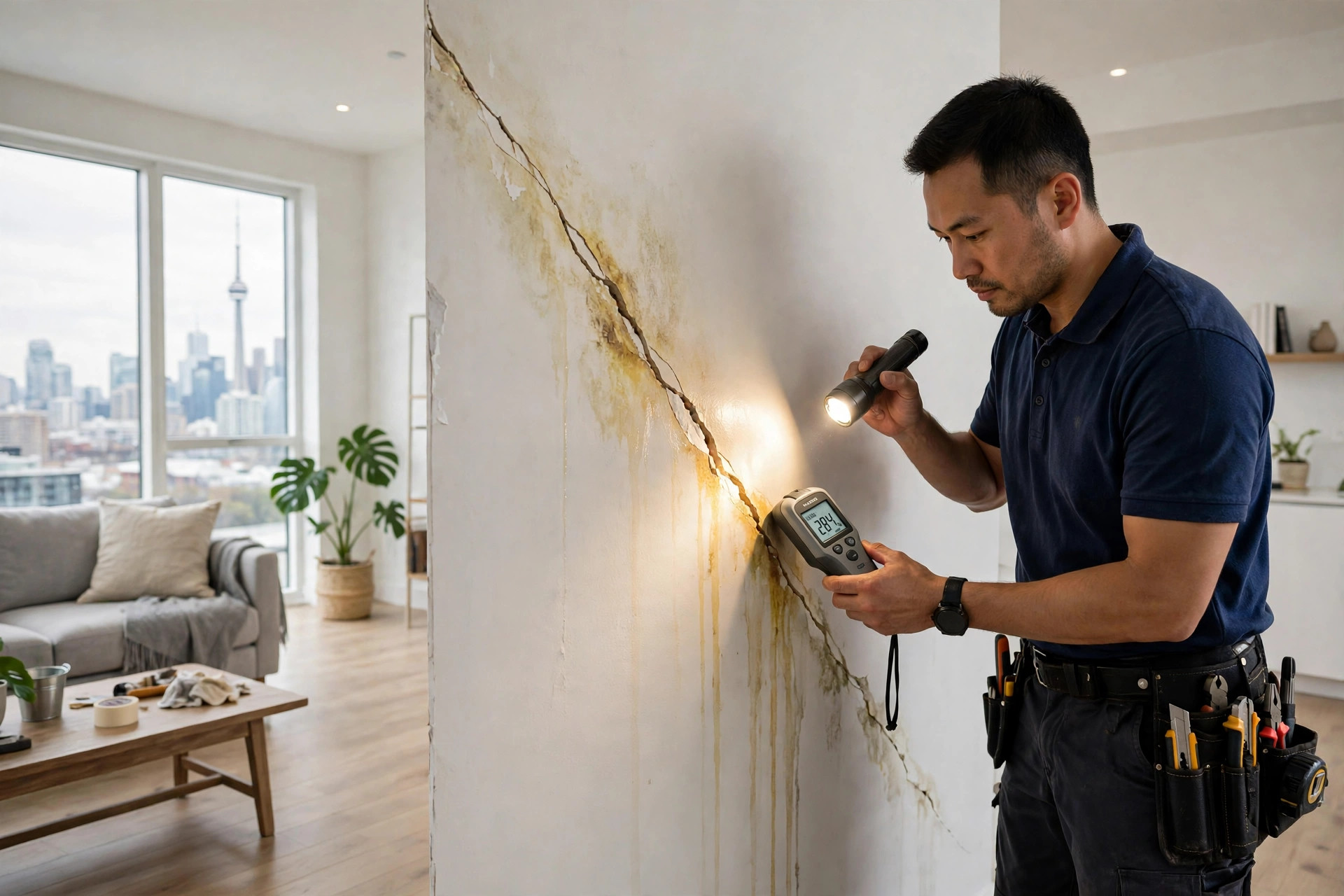
Most wall damage is exactly what it looks like: a dent from a doorknob, a scuff from moving furniture, a hairline crack from the house settling. Cosmetic. Patch it, paint it, forget it.
But some damage is a symptom of something happening behind the wall — a slow leak, moisture building up, or the structure moving. Paint over those and you don’t fix the problem; you hide it while it gets more expensive.
Here are the five signs we tell Toronto homeowners to take seriously.
1. A stain that’s growing, yellow-brown, or soft to the touch
A water stain that changes size or colour means water is still getting in. Press the spot gently: healthy drywall is hard. If it feels soft, spongy or crumbly, the gypsum inside has been soaking — possibly for months.
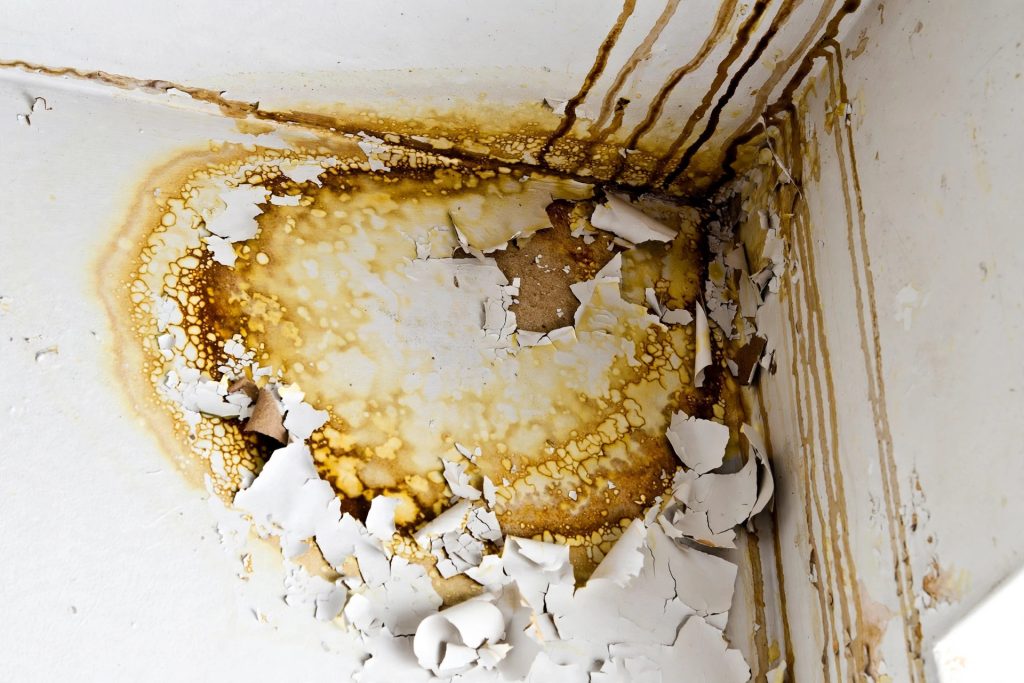
What to do: Don’t patch it yet. The leak source (roof, plumbing, a failed seal upstairs) has to be found and fixed first, and any wet or mouldy material removed. Patching over active water damage just traps moisture in the wall.
2. Cracks that keep coming back — or are wider than a credit card
A hairline crack under 1–2 mm is normal settling, especially in newer builds and with Toronto’s freeze-thaw seasons. What’s not normal:
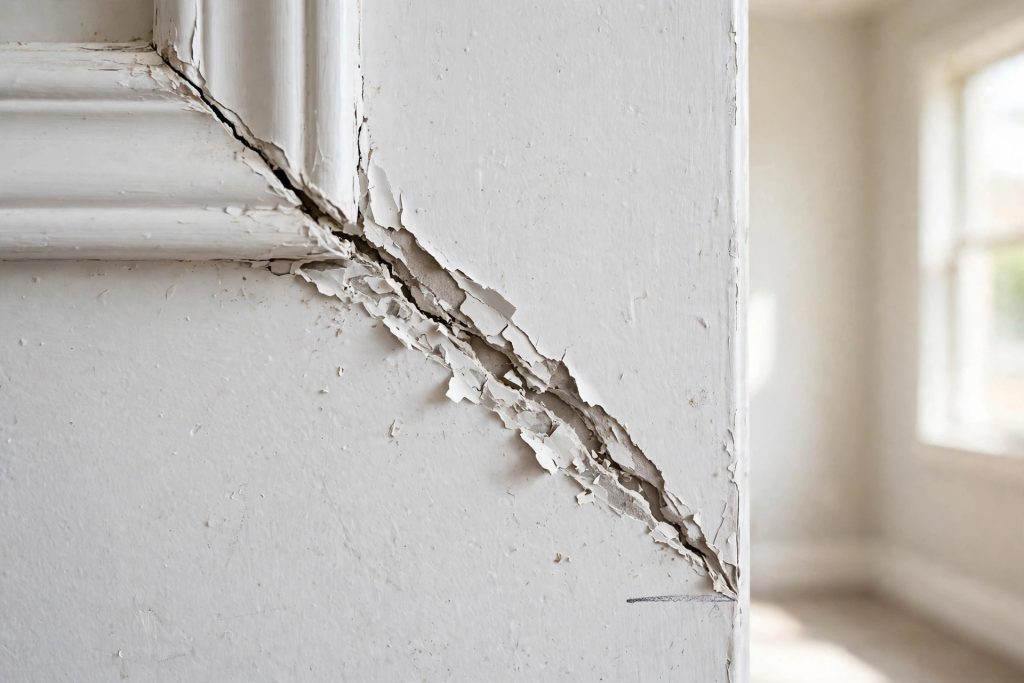
- A crack you’ve already repaired that reopens in the same place
- A crack wide enough to fit the edge of a credit card (~5 mm)
- Diagonal or stair-step cracks running from the corners of doors and windows
These point to movement — in the framing, the foundation, or a lintel — and a cosmetic fill will keep failing until the cause is understood.
What to do: Mark the end of the crack with a pencil line and date it. If it grows past the mark over a few weeks, get it assessed before repairing.
3. Bubbling, blistering or peeling paint that returns
Paint bubbles when moisture or heat gets trapped behind it. If you’ve scraped, primed and repainted a spot and the bubbling came back within a season, there’s moisture in or behind that wall — a slow plumbing leak, bathroom humidity with nowhere to go, or water wicking in from outside.
What to do: Treat the paint as the messenger, not the problem. The moisture source needs fixing before any finish work will last.
4. A musty smell, dark spots, or mould at the baseboards
That earthy, damp-basement smell near a wall — especially on an exterior wall or under a bathroom — usually means moisture inside the wall cavity. Visible dark spotting along baseboards or in corners confirms it. Mould spreads out of sight long before it shows, so what you can see is often the smaller part.
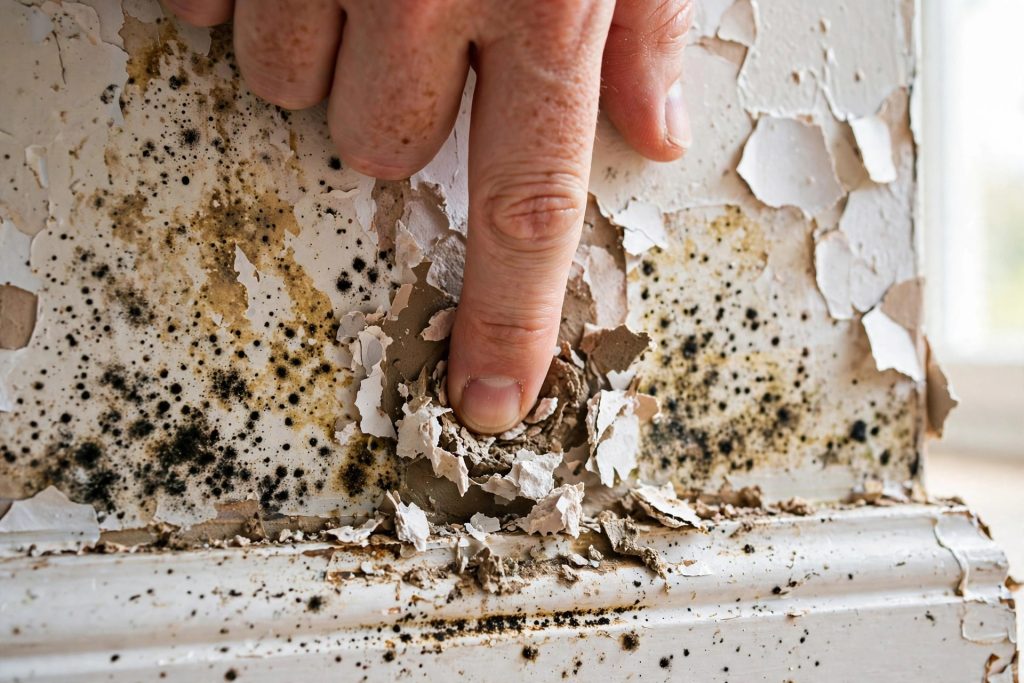
What to do: Don’t just scrub and paint it. The affected drywall section typically needs to be opened, the cavity dried and cleaned, and the moisture source eliminated. Small, contained areas are a routine repair; large areas (over roughly 10 sq ft) call for proper mould remediation.
5. Doors or windows suddenly sticking, gaps at the trim — or any ceiling bulge
When doors that used to close fine start rubbing, or gaps open up where trim meets the wall, the framing around them is moving. On its own it can be seasonal; combined with new cracks, it’s a pattern worth checking.
The urgent one in this category: a ceiling that bulges, sags or feels soft. That can mean water pooling above it — and water is heavy. Don’t poke it or stand under it; that’s a same-week call, not a someday project.
What a proper assessment looks like
A good repair visit starts with diagnosis, not a tub of filler: checking moisture, tracing stains back to their source, and testing whether cracks are stable or active. Only then does patching make sense — done in proper coats, primed so it won’t ghost through paint, with before-and-after photos so you can see exactly what was found and fixed.
If you’re looking at any of these five signs, our drywall patching service covers Toronto & the GTA — call (416) 670-0014 for a free estimate, and we’ll tell you honestly whether it’s cosmetic or not.
FAQ
Can I just paint over a water stain?
Only after the leak is fixed and the drywall is fully dry and sound — and then with a stain-blocking primer, not regular paint. Painting over an active stain seals moisture in and the stain (and the damage) comes back.
Are hairline cracks normal in Toronto homes?
Yes. Hairline cracks under 1–2 mm at seams and corners are common from settling and seasonal expansion and contraction. They’re cosmetic — it’s the wide, growing or returning cracks that need a look.
Does home insurance cover this kind of damage?
Sudden events like a burst pipe are often covered; damage from long-term, unaddressed leaks usually isn’t. Either way, fixing small problems early is far cheaper than documenting big ones later.